
Rewriting Hitchcock: What Archives Reveal About Film History (Preview)
by Tony Lee Moral
When I began researching Alfred Hitchcock nearly thirty years ago, my knowledge of the director was primarily through the biographies of John Russell Taylor and Donald Spoto, which offered contrasting accounts of the his life and work. Few filmmakers have generated as many competing historical narratives as Hitchcock, with over one hundred books written about him and many of them focusing on his individual films. For decades, his reputation has been shaped as much by interpretation as by evidence—biographies, memoirs, and second-hand accounts that, while compelling, are not always complete.
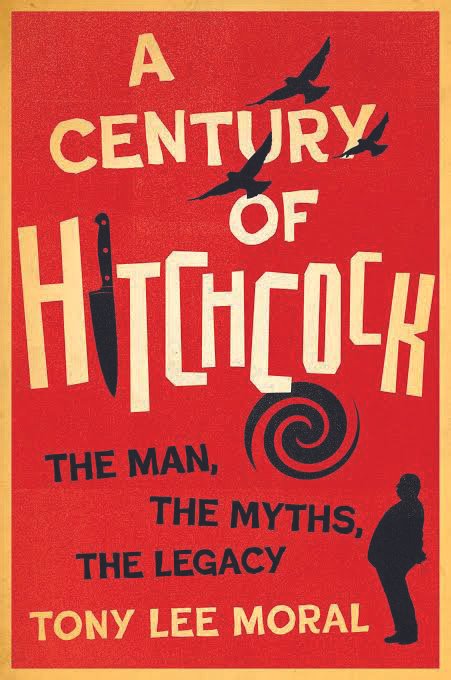
In researching my own books on Hitchcock, I repeatedly returned to archives, where the documents revealed a far more complicated picture. That is why institutions such as the British Entertainment History Project (BEHP), the Margaret Herrick Library in Los Angeles, the UCLA Library Special Collections, and the Harry Ransom Center at the University of Texas at Austin, provide primary materials, many of them underused or overlooked. They offer a more complex and, at times, contradictory portrait of Hitchcock and his collaborators. These archives do not merely supplement existing accounts; they challenge them and were the focus of my latest book, A Century of Hitchcock: The Man, The Myths, The Legacy (University Press of Kentucky, 2026).
The British
Entertainment History Project
While I was researching Hitchcock’s British period, the transcripts of the BEHP offered something biographies rarely capture: the voices of assistant directors, camera operators, electricians and editors who worked with Hitchcock in the 1930s, at Gaumont-British and British International Pictures. Founded in 1987, the BEHP aimed to create an archive to preserve the U.K.’s rich cultural heritage of the entertainment industries—film, television, theater, and radio. It contains over eight hundred audio interviews, many accompanied by transcripts, making it the U.K.’s largest oral history of the media sector, detailing the experiences of directors, editors, technicians, and camera crew.
Alfred Hitchcock, circa mid-1950s. Portrait courtesy of Photofest.
Unlike biographies or edited interviews, raw transcripts capture voices closer to the moment, less filtered, and often more candid through lived experience. These oral histories housed within the BEHP online digital library provide unique perspectives on Hitchcock’s early career and formative years. Such interviews situate Hitchcock within a wider industry context, documenting how his methods evolved in the British studio system before being refined in Hollywood.
The BEHP transcripts reveal far more than a collection of colorful anecdotes: taken together, they offer a detailed picture of Hitchcock’s working methods during the period in which his mature style was taking shape. Crew members repeatedly describe a director who planned visually and communicated through drawings in place of lengthy technical explanations. Peter Sargent remembered that Hitchcock could specify “the exact focal length of the lens to use and the exact setup,” while camera assistant “Tubby” Englander recalled that he “drew every single shot that he wanted,” with the camera crew then translating those sketches into the finished image. Editors and designers likewise stressed his precision. Hugh Stewart said Hitchcock supplied complete editing notes on The Man Who Knew Too Much (1934) and Maurice Carter explained that Hitchcock’s illustrated scripts gave the art department an unusual advantage because “all we simply had to do was take his drawing and translate it into the setting for him.” Crew recollections complicate the familiar image of Hitchcock as a solitary auteur: they confirm his extraordinary control but also show how he surrounded himself with the skills of a trusted team of cinematographers, editors, designers, assistant directors, and writers.
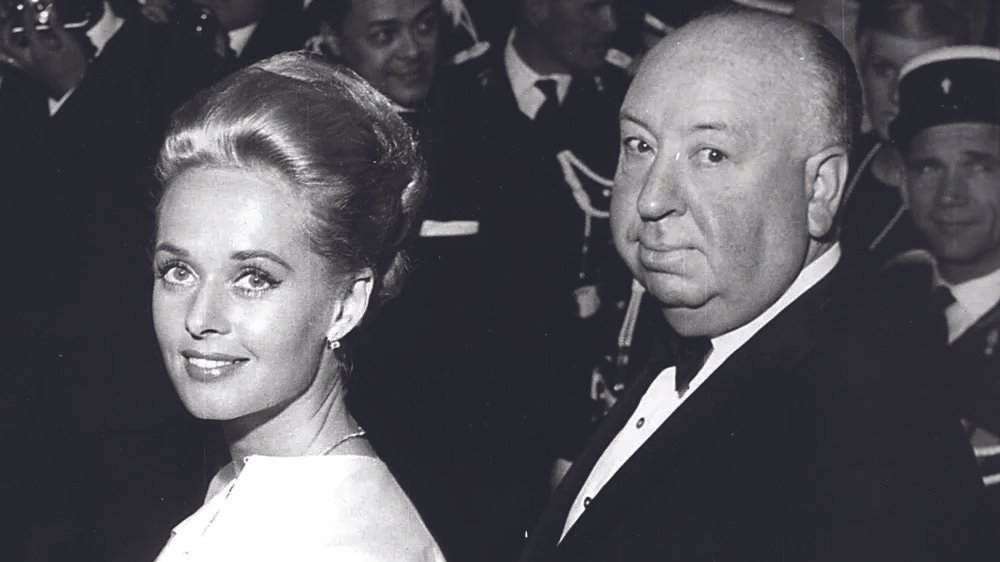
Hitchcock and Tippi Hedren during shooting of The Birds. The rumors of Hitchcock’s sexual assault on Tippi Hedren are refuted by Tony Lee Moral in his new book, which critiques Donald Spoto’s Dark Side of Genius biography. Photo courtesy of Photofest.
The transcripts also capture the atmosphere of British studio production and the effect Hitchcock had on younger colleagues. Several witnesses remembered him as exacting but stimulating rather than tyrannical. Assistant director Roy Ward Baker admitted that “everybody was shaking in their shoes” before Hitchcock arrived on the set of The Lady Vanishes (1938) yet added that the director was kind to him and that “I learnt more on that ten-week picture with him than all the rest put together.” Peter Sargent similarly recalled that, at the time, he did not realize how fortunate he was to work on The 39 Steps (1935) with Hitchcock but later came to appreciate “just what a master he was.” The archive therefore preserves a valuable counterweight to later, more sensationalized accounts: a portrait of Hitchcock as a formidable planner, a practical teacher, and the center of a collaborative studio culture whose technicians carried his methods into postwar British film and television.
Practical jokes were rife in British studio life, helping to break the monotony of long production days and foster camaraderie among the crew. One of the most frequently repeated anecdotes concerns a prop man who was allegedly left handcuffed overnight. Donald Spoto recounts the story as an act of calculated cruelty, claiming Hitchcock gave the man brandy laced with a laxative before abandoning him until the following morning, leaving him humiliated and soiled. Yet camera assistant Dudley Lovell offered a rather different version in his BEHP interview. According to Lovell, Hitchcock arranged to meet the prop man in a local pub, asking him to bring a pair of handcuffs needed for filming. After secretly persuading the landlord to add laxatives to the man’s beer, Hitchcock invited him to demonstrate the handcuffs, challenged him to finish his drink while wearing them, and then casually departed with the key, remarking that he would see him the next day. The unfortunate prop man returned home still handcuffed, only for the laxatives to take effect during the night in front of his wife. Unlike Spoto, who interpreted the incident as evidence of Hitchcock’s sadism, Lovell regarded it as typical of the rough-and-ready humor common on British film sets. As he recalled with amusement, “That was the sort of wicked pranks that went on,” adding with a chuckle that such behavior was simply part of studio life and the wider context of camaraderie to relieve boredom…
To read the complete article, click here so that you may order either a subscription to begin with our Winter 2026 issue, or order a copy of this issue.
Tony Lee Moral is a British author, filmmaker, and Hitchcock scholar who has written extensively on the director’s life and work, including five books to date.
Copyright © 2026 by Cineaste, Inc.
Cineaste, Vol. LII, No. 1
Quisque iaculis facilisis lacinia. Mauris euismod pellentesque tellus sit amet mollis.